The Hanged Man — tarot card meaning
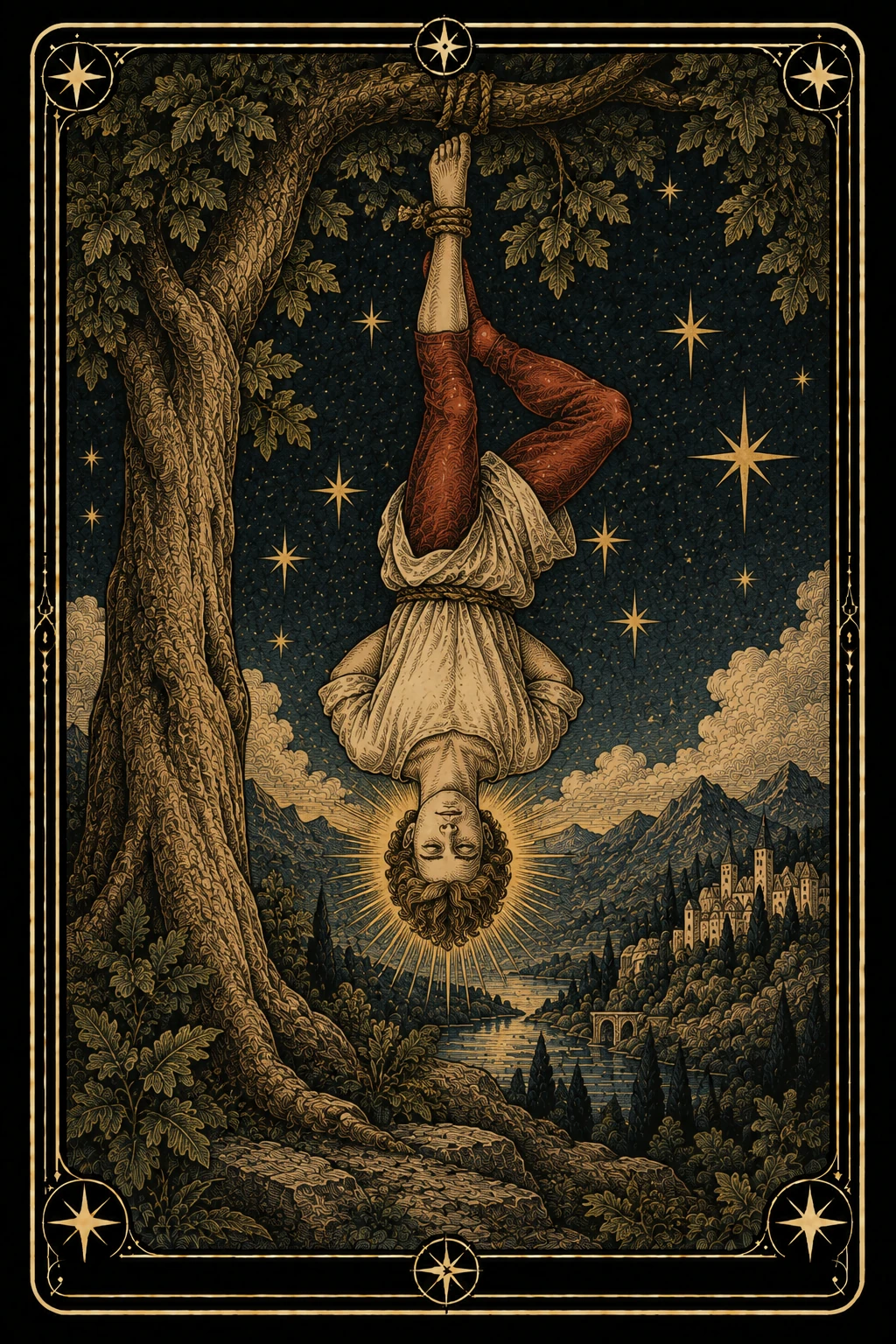
Major Arcana · XII
The Hanged Man
The Hanged Man is a pause that changes the view. In a spread, the Hanged Man more often points not to punishment, but to a need to stop and see the situation differently.
This card often centers on a voluntary or forced pause. The card can describe waiting, a refusal of habitual control, a strange interval when the old approaches no longer work. It does not promise that if you endure, everything will fall into place. It asks what this stop makes it possible to understand.
General meaning
In a broader reading, the Hanged Man describes a state of being in between. The card can mark a period when action stalls: an answer does not come, a project stands still, feelings do not develop in the usual way.
Sometimes the Arcana points to a conscious refusal to hurry, and then the pause is fruitful. Sometimes it points to a stuckness a person no longer notices. Reading this as “you have been crucified” is too theatrical. What matters is a change of perspective.
Next to cards of a sudden push, the Hanged Man asks you to pause. Next to cards of sacrifice, it warns against romanticizing useless suffering.
Upright
Upright, the focus is a meaningful pause. The upright Hanged Man often supports waiting, a reconsideration, a refusal to fight where fighting only tightens the knot.
If the question is “what should I do,” the card favors not doing it the old way. The emphasis is on a new view through a temporary stop. This is not a promise that the pause will be short: a hint that the meaning now is in revising the picture, not in forcing it.
Reversed
Reversed, the pause either ends too early or drags on into empty stalling. The reversed Hanged Man can describe waiting without insight, martyrdom, a refusal to let go of control that has long stopped working. Another possibility is an impulse to lunge into action from impatience and lose the lesson.
When the question concerns a situation, the reversed card often asks whether you are waiting for a new understanding, or staying still out of a habit of remaining “in process.” This does not mean an endless stop. It is a signal to distinguish sacrifice from clarity.
Love and relationships
In love, upright often describes a pause in the development of a bond, waiting for an answer, a readiness not to press. For a couple, a period when you need to look at the relationship from another side, rather than try to fix it with the same old scenes. For someone who is single, a mixed readiness: willing, and not yet willing.
Reversed, this can be a pattern of sacrificing yourself by enduring everything, a drawn-out undefined status, a refusal to leave and a refusal to come closer. It is worth distinguishing wise waiting from a fear of any change. The Hanged Man does not promise that a person will return if you wait long enough. It shows whether the pause is changing the view.
Work and career
At work, upright often points to a delay in a project, waiting for a decision from above, a need to revise an approach. The card can support learning in a lull, a refusal of false activity.
Reversed, it points to endless approvals without meaning, being stuck as the office victim, or missed deadlines from panic. It is useful to ask which pause is teaching you something now, and which only feeds anxiety.
Money and finances
In money questions the Hanged Man is more often about delay: a payment does not come, spending has to wait, income cannot be sped up. Upright, it can support careful waiting, a refusal to invest blindly.
Reversed, it speaks of money that is tied up and going nowhere, sacrifice for status, an impulse to end the wait with a losing deal. It is worth not confusing patience with inaction from fear.
Advice
Stop pushing a door that opens the other way. Give the pause a question: what am I meant to learn while nothing is moving? If the answer is already there, do not prolong the stop artificially.
If you are suffering without meaning, the card suggests changing the angle rather than increasing the sacrifice. What helps here is waiting that comes from a new understanding of the situation, not from powerlessness.
Symbolism
In the classical Rider–Waite tradition, a person hangs upside down from a living beam, one foot caught, the face calm. Around the head is a radiance, often read as insight that appears when the body is inverted. The hands are often folded behind the back, a detail traditionally associated with a refusal of habitual action.
Red trousers and blue clothing are traditionally associated with will and feeling in the sacrifice. In a reading, it may matter whether the emphasis falls on the radiance of a new view, being bound, or the calm in a strange pose.
Combinations with other cards
Next to Death, the pause can prepare an ending and a way of moving on. With the Fool, a new view can become a real step once the lesson is taken. With Temperance, waiting looks for a rhythm rather than martyrdom: to align, not to freeze forever.
Neighboring Arcana show whether the waiting is fruitful. The Hanged Man does not mean action is shut off forever. It asks that action come from another angle.
Frequently asked questions
What does the Hanged Man mean in a spread?
Often a pause and a change of view. The card points toward stopping, not a promise that if you endure, everything will fall into place.
If the Hanged Man appears, should I do nothing?
Not always. The advice is not to do it the old way. If the lesson of the pause is already understood, stretching the wait further can be habit rather than wisdom.
How should I read the reversed Hanged Man?
The reversed card can speak of a stall without meaning, martyrdom, or breaking the pause from impatience. Ask whether waiting is teaching you, or only feeding anxiety.
What does the Hanged Man mean in love?
An undefined status, waiting, or a need to see the bond differently. Reversed, sacrifice without clarity, or a fear of any step.