The Minor Arcana are the 56 cards that describe ordinary events, reactions, and ways of acting. The Major Arcana set the larger theme. The Minor Arcana often show how that larger theme is playing out in everyday circumstances: in a relationship, at work, with money, in a conversation, or in a mood. In a spread they are often the practical part of the answer.
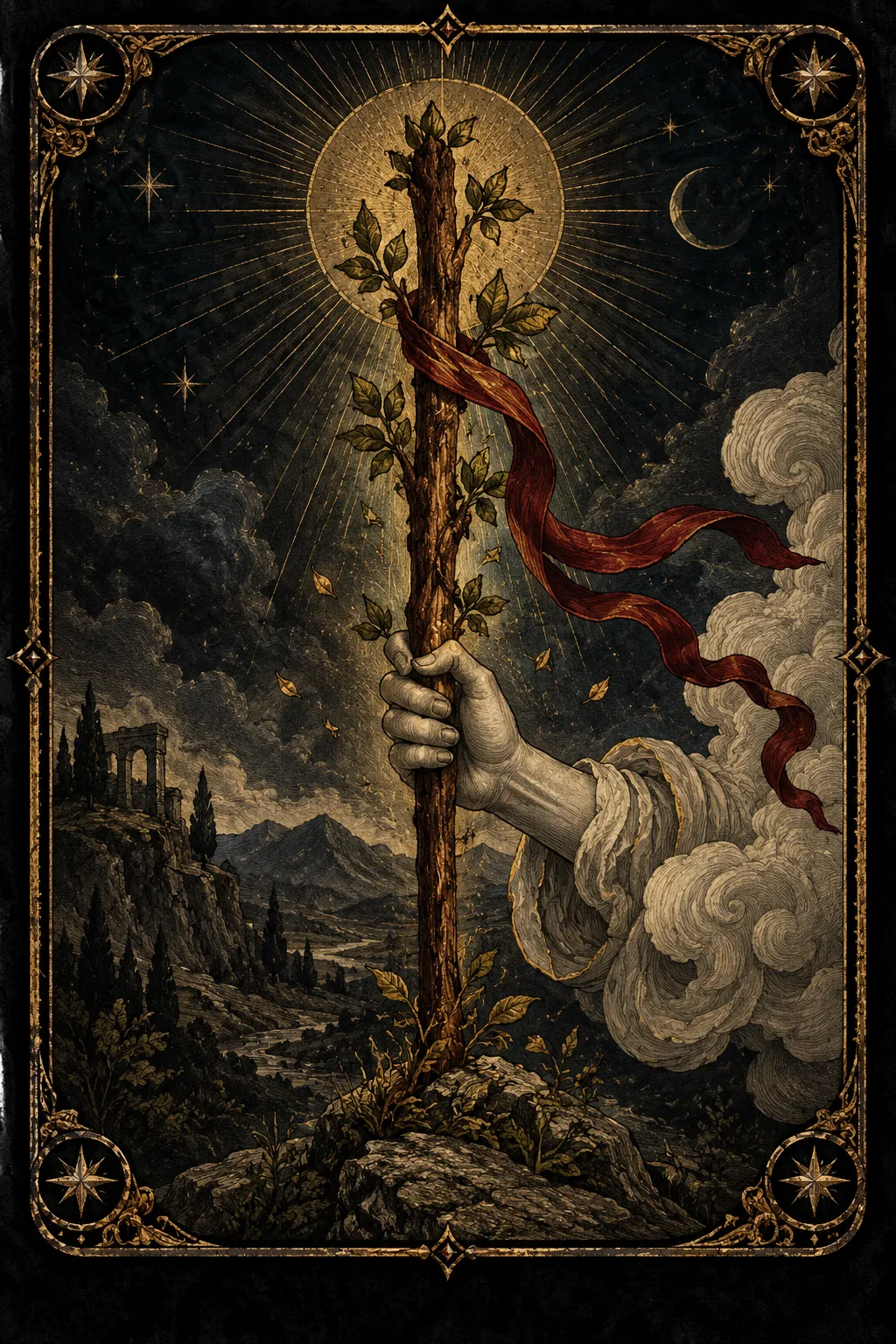
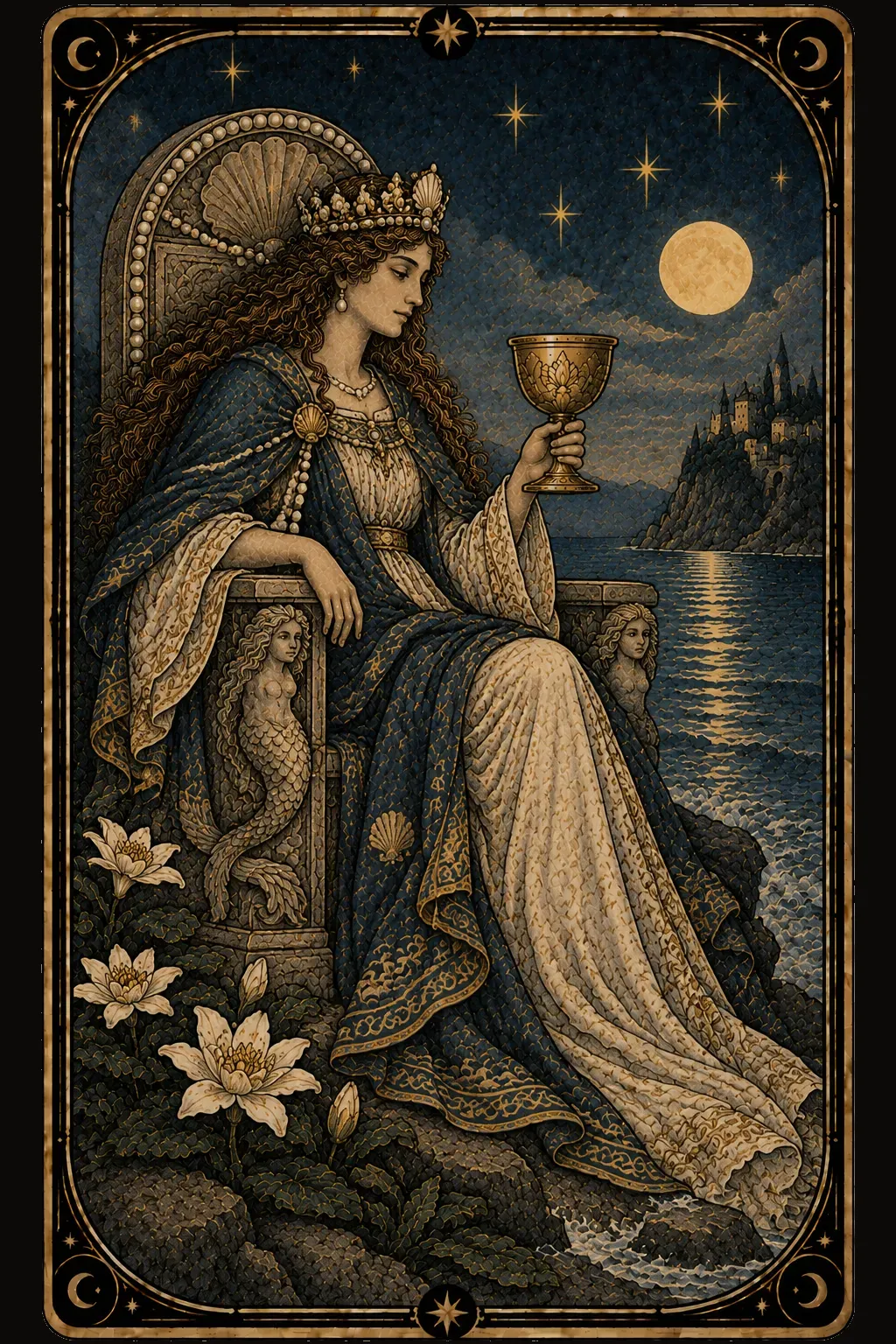
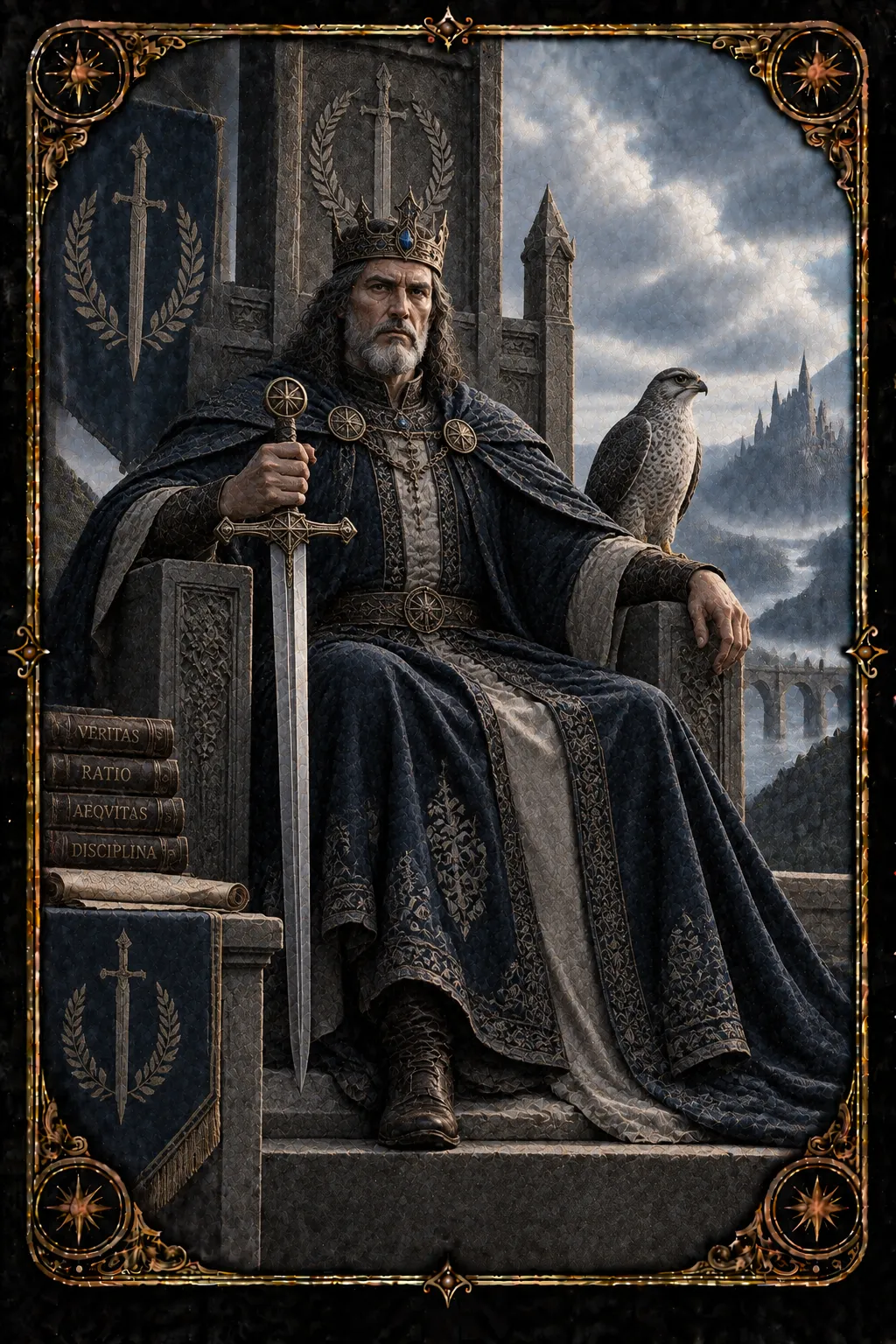
Where the Minor Arcana sit in the deck
A tarot deck has 78 cards: 22 majors and 56 minors. The minors divide into four suits — Wands, Cups, Swords, and Pentacles — and they resemble a playing-card deck. Each suit has ten numbered cards and four court cards: Page, Knight, Queen, and King. The suit shows the area of life; the number or rank shows how its theme is expressed.
“Minor” does not mean less important. It refers to the more immediate scale of everyday experience. Majors describe stages and turning points. Minors show the process, the step, the feeling, and the detail: where the strain started, what has already begun, what still needs work.
Suits, numbers, and court cards
The structure comes from European playing cards. Later esoteric reading matched the suits to four elements: Wands with Fire, Cups with Water, Swords with Air, Pentacles with Earth. Rider–Waite–Smith, the tradition TARORIA uses, gives every numbered card a scene. Marseille numbered cards are often the suit symbol alone, without a story. These differences also shape how the cards are read: Marseille relies more heavily on number and suit, while Rider–Waite–Smith adds a pictorial scene to each numbered card.
Numbers follow a simple sequence. The Ace is a start and a potential. The Two is a choice or an exchange. The Three is growth and a first result. The Four is stability. The Five is strain or a crisis. The Six restores a balance. The Seven is a test. The Eight is movement and skill. The Nine approaches a result. The Ten closes the cycle. The sequence is easier to remember than fifty-six separate keywords.
Court cards work differently. They can represent a person, a role, or a way the qualities of the suit are expressed. The Page is learning, interest, or a message. The Knight is movement toward a goal, sometimes too fast. The Queen is inward knowledge of the suit’s qualities. The King is outward responsibility and use. In some questions they describe a quality or aspect of character that is especially active at the moment, rather than another person.
What the four suits mean
Wands concern initiative, will, inspiration, creative work, and career movement. The Ace of Wands is often a new impulse to begin. The Three of Wands is planning and waiting for a first result.
Cups concern feelings, relationships, sympathy, and receptivity. The Two of Cups often marks mutuality or a partnership. The Five of Cups marks grief, disappointment, or attention stuck on what cannot be recovered.
Swords concern thought, speech, decisions, conflict, and sometimes uncomfortable clarity. The Ace of Swords is a new understanding or a sharp sentence. The Three of Swords is a painful truth, a harsh conversation, or a wound made of words.
Pentacles concern the material world: work, income, resources, health, household, and results that can be kept. The Four of Pentacles can be a grip on what one has. The Ten of Pentacles can be a solid outcome, family support, or long-term stability. Time and habit matter in this suit more than a sudden turn.
How to read numbered and court cards
Read a numbered card as suit plus number. Suit says what the matter is about. Number says which phase it is in. The Seven of Wands is not mere energy. It is action that has to hold its ground. The Six of Cups is not “emotion” in general. It is a return to a warm memory or a familiar feeling.
With court cards, decide what job the card has in this reading. If it points to a person, look at manner and context. Do not assign age, gender, or a job from the picture by default. If it describes a trait: Page learns, Knight pursues, Queen understands, King directs. As advice, the card suggests a way of behaving, not an event.
An upright card is often the clearer, more open form of its meaning. A reversal can be delay, blockage, excess, or difficulty in using the energy. Some readers do not use reversals at all and take those shades from neighbouring positions. TARORIA card meanings are written for the upright pictorial tradition. What matters is seeing what the card is doing here: a start, a stall, a skew, hidden work, or an outside event. The same card changes with the question and the position it occupies.
Minor Arcana inside a spread
Read minors with the majors, not as a separate pile. A major sets the theme. Minors show how it appears in practice. A card of change beside the Eight of Pentacles can mean the change will take skill and repeated work. Many Cups colour the situation with feeling. Many Swords point to mental strain or conflict. Wands emphasise activity. Pentacles emphasise the material side.
A useful order for a first pass: dominant suit, then number, then the scene. A spread heavy with minors is usually more concrete. A spread heavy with majors feels like a larger period. The same minor as an obstacle can look like delay, and as advice can mean “do not rush.”
The common error is a literal label. The Ten of Swords is not only a catastrophe. The Four of Pentacles is not only greed. Look for the overall pattern: an ending, strain, holding on, caution, recovery, a step forward. Suit shows the field, number the phase, the court card a type of energy or an actor, and the position the function in this question.