Wheel of Fortune — tarot card meaning
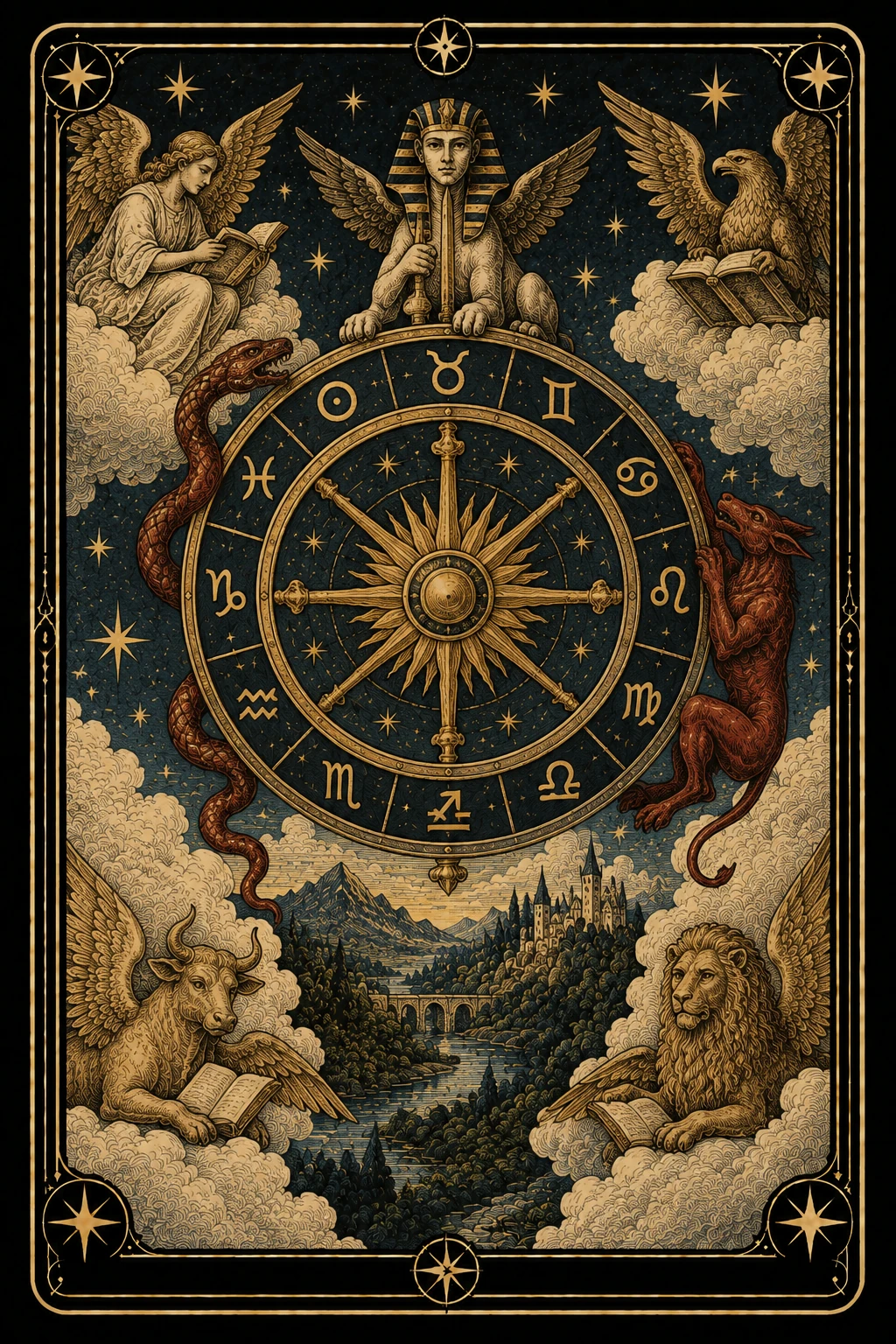
Major Arcana · X
Wheel of Fortune
The Wheel of Fortune is about a turn and a change of circumstances. In a spread, the Wheel of Fortune more often points to circumstances beginning to shift, even if a person would prefer to keep the previous position.
The card is closely connected with change, timing, and the influence of circumstance. The card can describe chance, a window of opportunity, a shift toward more or less favorable conditions, an external factor you do not fully control. By itself it does not mean a win or guaranteed success. It asks you to look at what is changing now, and how ready you are to adapt.
General meaning
In a broader reading, the Wheel often points to circumstances developing beyond a person’s full control, and to the cyclical nature of change. The card can mark a period of change: a new chapter, unexpected news, a shift in the usual rhythm, a change of conditions.
Sometimes the Arcana indicates that it is time to let go of the illusion of complete control. Reading this as “everything will sort itself out and will certainly go well” is risky. Periods of luck and difficulty can replace one another. It matters not to take a temporary success as guaranteed, or a difficult stretch as permanent.
Next to cards of effort, the Wheel often reminds you that a result depends not only on effort, but on external circumstances and timing. Next to cards of delay, it can point to the beginning of changes that have not yet given a visible result.
Upright
Upright, the emphasis is on a noticeable change in the situation. The upright Wheel often points to the value of flexibility and a readiness to adapt, to using an opening that has appeared, rather than arguing with what is already changing.
If the question is “will it change,” the card often points to movement and the likelihood of change, rather than guaranteeing a particular outcome. Trying to keep the old order can become less effective as circumstances shift.
Reversed
Reversed, change is often resisted or not recognized. The reversed Wheel can describe a repeat of similar problems or patterns, a return to old mistakes, a sense of bad luck, a lost sense of control, instability.
At the opposite extreme is an attempt to force events: a person may spend energy trying to control circumstances completely instead of adapting as they change. In this context, the reversed card often asks which previous state you are trying to keep. It does not mean an inevitable long run of failure.
Love and relationships
In love, upright can point to a new stage of a relationship, an unexpected meeting, a change in a couple’s circumstances, renewed contact, a move, or an external event that affects the bond. For someone without a relationship, the card can speak of a period when the circumstances of meeting, or a personal situation, begin to change. For a couple, a need to admit that the relationship is entering a new stage or changing under the influence of circumstance.
Reversed, this can be a repeat of the same conflicts, instability, an on-and-off relationship, waiting for change without real action, an attempt to return to the previous arrangement. It matters to understand whether the relationship is actually developing, or simply repeating the same unstable pattern. The card itself does not mean inevitable marriage, breakup, or the return of an ex. Look at what stage the relationship is in, and what has actually changed.
Work and career
At work, upright often points to a change of role, market, or team, an unexpected offer, a reorganization, a move into a new field, the influence of external circumstances. The card can describe an opening worth using after the conditions have been weighed. It underlines the value of flexibility and a readiness to change approach: it is not worth keeping the previous position at any cost if working conditions have changed substantially.
Reversed, it points to repeating conflicts, a sense of professional stall, instability, an unlucky moment for a particular step, resistance to change, activity without noticeable progress. It is useful to ask what stage the project is in now: start, peak, decline, and whether you are deciding from conditions that have already changed.
Money and finances
In money questions the Wheel is more often about the variability of income, expenses, or financial circumstances than about a stable salary. Upright, it can point to a change in income, an unexpected opening, a change in the terms of a deal, a favorable coincidence of circumstances, a need to adapt a budget quickly. The card can describe an opening for a deal when the conditions fit. In an unstable situation it is especially important to weigh risk and not decide only from an expectation of luck.
Reversed, it speaks of repeating financial mistakes, unstable income, gambling, betting on luck, ignoring changed conditions, a financial plan that no longer works. It is worth revising the budget and decisions in light of current circumstances, rather than counting on the situation to correct itself. The card does not invite gambling or risking money for luck.
Advice
Name what is actually changing now, and admit where your control is limited. If an opening has appeared, weigh the conditions and decide how far it matches your aims and an acceptable risk. Temporary difficulties should not be taken as proof of personal failure: reduce optional risks and concentrate on what you can actually do.
Do not spend energy trying to hold everything that does not depend on you. Depending on the situation, preparation, decisive action, or a refusal of the previous plan may be needed.
Symbolism
In the classical Rider–Waite tradition, a wheel in the clouds is surrounded by figures. They are often read as a reminder of cycles: what rises also descends, as a traditional idea rather than a literal prediction. At the corners are four winged figures with books, traditionally linked with the four evangelists and with stable principles amid change. The sphinx at the top is often associated with a riddle, knowledge, and an attempt to keep stability amid change.
Letters and symbols on the wheel are traditionally read as a hint at the link between change, fate, and a wider order.
Combinations with other cards
Next to the Tower, the pairing can point to a sharp change of circumstances or a crisis that quickly alters the situation. With the World, the pairing can strengthen the theme of completing one period and moving into the next. With the Fool, the theme of chance grows stronger: a new opening needs openness, but does not remove the need to weigh consequences.
Neighboring cards help you understand in which area of life change is happening and what consequences it may have. Not all circumstances are under personal control, but responsibility for your own decisions remains.
Frequently asked questions
Does the Wheel of Fortune promise luck?
No. Upright, it more often says the situation is already changing and a new opening may appear. The card can point to favorable circumstances, but by itself it does not guarantee luck.
Does the reversed Wheel mean a run of bad luck?
Sometimes it feels that way: a repeat of similar patterns, instability, resistance to change. The reversed card does not mean an inevitable long run of failure. Ask which changed situation you are still trying to treat as if it were the old one.
How is the card read in relationships?
As a change of circumstances or of a stage of the relationship: a meeting, a new stage, a repeat of the same conflicts, or an external event. The card itself does not mean inevitable marriage or breakup. Look at what stage the relationship is in, and what has actually changed.
Can I “pull in” luck if the Wheel appears?
The card does not promise that rituals or wishing will change circumstances by themselves. It is more useful to weigh real circumstances, possible risks, and the actions that are actually under your control.